

The importance of gut health in poultry production cannot be overlooked, as it has a direct impact on bird performance, growth, and overall production efficiency. A healthy digestive system is essential for proper digestion, absorption, and optimal utilization of nutrients. Producers strive to improve gut health through balanced nutrition, effective management practices, and increasingly through the use of natural additives such as prebiotics, probiotics, and phytogenics. Poultry producers who prioritize gut health can achieve higher productivity, lower disease incidence, and improved animal welfare within their flocks.
Plant-based bioactive compounds are derived from medicinal plants and have long been used in traditional human medicine as well as traditional veterinary medicine. Some prominent examples include essential oils, tannins, flavonoids, saponins, and other phytochemical compounds. The use of medicinal plants in promoting gut health is mainly attributed to their beneficial effects on the digestive system. These include their effectiveness in enhancing intestinal villi development, improving gut immunity, and strengthening the intestinal barrier to prevent pathogen colonization. Many medicinal plants have been recognized for their natural antimicrobial or phytobiotic properties. The use of herbal dietary supplements is therefore recommended to maintain a balanced and healthy gut microbiota and to minimize the occurrence of gastrointestinal infections.
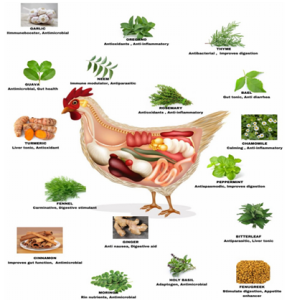
Below is a summary of the most important aspects of gut health in poultry production:
- Growth Performance and Feed Efficiency:
Gut health is closely associated with poultry growth performance. Birds with a healthy intestinal system are able to convert feed into body mass more efficiently, resulting in higher growth rates and improved feed conversion efficiency. The selection of safe and effective feed additives that promote gut health not only provides poultry producers with the best return on investment, but also contributes to the achievement of sustainable production.
Plant components such as roots, leaves, and bark are classified as medicinal plants or phytobiotics and are used in the production of therapeutic compounds. In poultry production, the most commonly used herbs and spices as plant-based feed additives include oregano, thyme, garlic, horseradish, red pepper, peppermint, cinnamon, anise, clove, rosemary derivatives, citrus, and sage. Various types of phytogenic plants and their associated bioactive properties that contribute to improved gut health in poultry are illustrated in the figure. Plants such as turmeric, garlic, oregano, and thyme exhibit antimicrobial, antioxidant, anti-inflammatory, and digestive-stimulatory properties. These natural additives support gut integrity, immune system function, nutrient utilization, and microbial balance, thereby offering sustainable alternatives to antibiotic growth promoters in poultry nutrition.
- Immune System Function:
A healthy gut establishes a diverse intestinal microbiota, which is essential for the development of immune tolerance and protection against infections. An intact intestinal barrier prevents the colonization of pathogenic microorganisms, reduces the risk of infections, and enhances the overall disease resistance of the bird. - Balance of the Gut Microbiota:
A diverse and well-balanced gut flora is crucial for maintaining intestinal health and overall welfare in poultry. Preservation of the intestinal microflora contributes to the establishment of biological homeostasis. The dominance of pathogens in the gut leads to damage to the intestinal barrier. A healthy microbial community plays a key role in metabolism, nutrition, immune system development, and disease prevention. - Antioxidant Activity:
Medicinal plants often contain antioxidants that help neutralize free radicals and protect gastrointestinal cells from oxidative damage. This contributes to the improvement of overall gut health and the maintenance of gastrointestinal integrity.
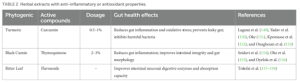
Plant extracts with anti-inflammatory or antioxidant properties, such as turmeric, black cumin, and bitter leaves, are presented in Table 2. These plants, which are rich in bioactive compounds such as curcumin, thymoquinone, and flavonoids, reduce intestinal inflammation and oxidative stress, promote mucosal healing, and improve intestinal morphology. Their protective role makes them particularly valuable in poultry subjected to stress or exposed to pathogenic challenges. - Efficient Digestion and Nutrient Absorption:
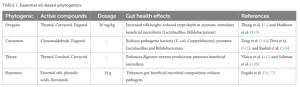
A healthy intestine ensures efficient digestion and absorption of nutrients, thereby maximizing the bird’s growth potential and feed conversion efficiency. Tables 1 to 3 classify phytogenic compounds based on their primary bioactive constituents and their physiological effects on poultry gut health. Table 1 presents essential oil–based medicinal plants. Their active components, such as thymol, carvacrol, cinnamaldehyde, and linalool, exhibit antimicrobial effects, stimulate beneficial gut microbiota (such as Lactobacillus and Bifidobacterium), and improve intestinal morphology by increasing villus height and enhancing enzyme secretion. These medicinal plants are widely recognized for improving digestive efficiency and protecting gut health and integrity.
- Improvement of Nutrient Absorption:
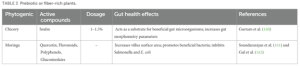
These compounds can contribute to increased growth rate and improved feed conversion efficiency. They act as prebiotics by stimulating the growth of beneficial intestinal microorganisms and enhancing intestinal structure. Their inclusion in the diet has been associated with increased villus development.
They also inhibit intestinal pathogens such as Escherichia coli and Salmonella. This diverse group includes sweet wormwood (Artemisia annua), garlic, and ginger. These plants enhance gut health through mechanisms such as increased secretion of digestive enzymes, improved intestinal motility, strengthening of the intestinal barrier, and inhibition of intestinal pathogens such as E. coli and Salmonella. Their bioactive compounds (such as artemisinin, allicin, and gingerol) also exhibit antimicrobial activity and contribute to improved nutrient absorption.
Classification of Phytogenic Compounds
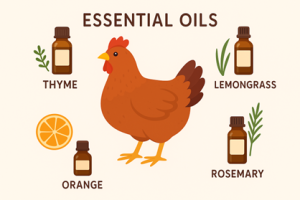
Essential Oils
The active constituents present in essential oils make them one of the most economically important categories of phytogenic compounds. Essential oils have been shown to play a significant role in protecting plants against insects, fungi, viruses, and bacteria. According to research, phytogenic additives—particularly those belonging to the essential oil group—enhance feed palatability, which can subsequently increase feed intake and improve poultry performance.
Essential oils are volatile aromatic substances extracted from plants. They possess the characteristic fragrance and distinctive properties of the source plant and are widely used in the manufacture of perfumes, flavoring agents, and pharmaceuticals. Essential oils, oleoresins, and natural extracts are plant-derived materials that are generally recognized as safe (GRAS) for their intended use.
Spices and Medicinal Herbs
Spices are potent or aromatic compounds of plant origin used primarily as flavoring agents and preservatives, whereas medicinal herbs are flowering plants whose stems are often non-woody and short-lived, valued for their flavor, aroma, and medicinal properties. Plant parts such as roots, leaves, and bark are classified as medicinal plants or phytobiotics and are used in the production of therapeutic agents.
In poultry production, the most commonly used medicinal herbs and spices as phytogenic feed additives include oregano, thyme, garlic, horseradish, chili pepper, red pepper, black pepper, peppermint, cinnamon, anise, clove, rosemary derivatives, citrus, and sage. Various phytogenic plants and their associated bioactive properties that contribute to improved gut health in poultry include turmeric, garlic, oregano, and thyme, which exhibit antimicrobial, antioxidant, anti-inflammatory, and digestive-stimulatory activities. These natural additives support gut health, immune system function, nutrient utilization, and microbial balance, thereby offering sustainable alternatives to antibiotic growth promoters in poultry nutrition.
Summary
The use of phytogenic feed additives in poultry production represents a promising alternative to antibiotic growth promoters; however, several critical knowledge gaps still hinder their optimal application. Future research should primarily focus on the standardization of herbal formulations, particularly through quantitative production and precise identification of bioactive components. Detailed dose–response studies are required to determine minimum effective concentrations, identify potential toxicity thresholds, and evaluate interactions with commercial feed processing conditions, especially pelleting. In addition, investigations into the stability of these compounds during feed storage and manufacture are necessary to enhance product shelf life and ensure consistent performance.
Another major research priority is the evaluation of synergistic or antagonistic interactions between phytogenic compounds and other functional feed additives (such as probiotics, prebiotics, enzymes, and organic acids). For instance, studies should assess whether combined applications enhance intestinal barrier integrity or immune responses more effectively than when these additives are used individually.
Conclusion
The incorporation of phytogenic feed additives represents a practical and effective strategy for improving gut health and overall performance in poultry production. By enhancing immune responses, improving nutrient absorption, and optimizing gut microbial balance, their diverse bioactive constituents contribute to reducing the reliance on antibiotics. Despite the well-documented benefits of phytogenic compounds, challenges related to compositional variability, standardization, and cost-effectiveness remain to be addressed. Future studies should focus on optimizing their utilization through innovative formulation strategies and comprehensive evaluation of their long-term effects. By integrating phytogenic compounds into poultry feed, the industry can enhance sustainability, productivity, and animal health, thereby paving the way toward antibiotic-free poultry production systems.

