

Foot-and-mouth disease (FMD) is a highly contagious infection affecting cloven-hoofed animals. This article aims to identify the existing data gaps required to enhance prevention and strengthen appropriate control measures for this disease. The World Organisation for Animal Health (WOAH), the World Health Organization (WHO), and the Royal Institute of International Affairs (Chatham House) are currently conducting collaborative research to improve the management of FMD.
The first step in the biosafety roadmap: laboratory vigilance and precision
A technical working group composed of 15 experts was convened to establish a framework for the biological risk management (BRM) of the FMD virus. The objective of this group is to support the application of biological risk management principles in laboratories and to improve biosafety and operational resilience.
To achieve this, the group performed a comprehensive gap analysis to identify weaknesses requiring improvement in the detection and handling of pathogenic agents. This assessment covered all stages of laboratory and research activities, including:
- Receipt and processing of samples
- Conducting diagnostic assays
- Working with animal models
- Preparation and processing of tissues
- Necropsy procedures
- Culturing and maintenance of pathogens
- Sample storage
- Disposal of biological waste
- Disinfection and inactivation procedures
To gather the necessary information, the group reviewed multiple sources of evidence.
The summary of evidence and the potential biosafety gaps was categorized into five major areas:
- Inoculation pathways and routes of transmission
- Infectious dose
- Laboratory-acquired infections
- Disinfection and decontamination strategies

General Characteristics
Foot-and-mouth disease (FMD) is a highly contagious viral infection caused by the foot-and-mouth disease virus (FMDV), a single-stranded RNA virus belonging to the family Picornaviridae. The disease primarily affects cloven-hoofed animals and can be transmitted through aerosols and droplets, as well as via indirect or direct contact with contaminated materials or infected hosts.
FMDV comprises seven immunologically distinct serotypes. In Asia, four serotypes—O, A, Asia-1, and C—have been reported, with the first three being predominant. In South America, only three serotypes are currently in circulation. FMD was first detected in Iran in 1951, and the serotypes identified to date include A/Asia/A 05/Far 11, A/Asia/A G7, O/ME-SA/PanAsia-2/Ant-10, and Asia 1/Asia/Sind 08.
Virus Transmission
Transmission of FMDV among animals occurs mainly through direct contact. Infection is typically initiated by the deposition of virus-laden droplets or aerosols in the respiratory tract or by mechanical transfer of the virus from infected to susceptible animals, with subsequent entry through skin abrasions or mucosal surfaces.
Indirect transmission may occur through contaminated surfaces, equipment, or products, contributing to the rapid spread of the virus.
FMDV is considered highly infectious due to its ability to survive in the environment in the absence of an animal host. Potential reservoirs include fecal matter, bodily secretions from infected animals, and contaminated fomites. Humans may act as mechanical vectors and play an important role in virus dissemination.
In situations where infection is widespread among livestock, airborne transmission can facilitate the spread of the virus between nearby farms. Furthermore, humans can introduce the virus into susceptible populations via contaminated clothing, footwear, or equipment. In many facilities, personal protective equipment (PPE) is not routinely used during the handling of infected animals, which increases the risk of virus transmission. Evidence shows that hygiene measures—such as changing clothing and footwear, handwashing, or showering—effectively reduce the likelihood of spreading FMDV. The virus has also been shown to remain viable for 24–48 hours in the nasal passages of individuals who were exposed to infected animals.
Local and National FMD Status
Biosafety standards must be tailored to the epidemiological status of FMD within each region or country. Minimum biological risk management requirements for laboratories handling FMDV are categorized across four biosafety levels, depending on national or local virus prevalence. Current guidelines have been published for Category C and Category D laboratories:
- Category A: General diagnostic laboratories operating in FMD-endemic countries.
- Category B: Laboratories working with infectious FMDV in endemic settings.
- Category C: Laboratories conducting diagnostic investigations for FMD as part of a national emergency response in FMD-free countries.
- Category D: International reference laboratories handling infectious FMDV in countries officially free from FMD.
Treatment and Prevention
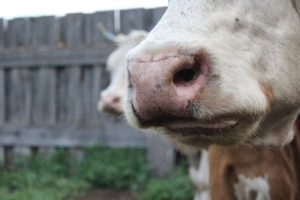
In endemic countries, prevention and control of foot-and-mouth disease (FMD) are primarily achieved through vaccination. The vaccine must be effective against the specific serotype and subtype responsible for the outbreak, as FMDV comprises seven recognized serotypes and more than 60 sublineages. Immunity to one serotype does not confer protection against others. In regions where FMD circulation is extensive and complex, stamping-out policies combined with ring vaccination may be implemented to eliminate the disease.
Disinfection
Given the sensitivity of FMDV to pH changes, the use of weak acidic or alkaline disinfectants can substantially reduce viral load and limit spread. Effective disinfectants for contaminated surfaces include limewater, citric acid, 2% sodium hydroxide, and 21% potassium peroxymonosulfate.
Vaccination
Vaccination remains one of the cornerstone strategies in FMD control. However, vaccination policies vary according to the circulating serotypes and regional epidemiological patterns, and vaccination cannot replace good hygiene practices and adherence to biosafety principles.
Surveillance and Early Detection
Because FMDV can be transmitted before clinical signs appear, continuous monitoring of animal health is essential. Close observation for signs such as lameness, vesicular lesions of the mouth or feet, and prompt reporting to veterinary authorities are key components of early outbreak containment.
Quarantine of Newly Introduced Animals
Quarantining newly purchased animals significantly reduces the risk of introducing FMD into previously unaffected herds.
Stress Reduction and Immune Support
Optimal nutrition and effective herd management enhance the animals’ resilience and increase their capacity to resist infectious diseases.
Farm-Level Biosafety Measures
Access Control
Restricting access to farms—including the movement of visitors, vehicles, and equipment—is critical. The use of disinfectant footbaths and vehicle disinfection points can help prevent the mechanical introduction of the virus.
Cleaning and Disinfection
Regular cleaning and disinfection of animal housing, feeding equipment, and facilities are essential, particularly after animal movement or mixing.
Movement Management
Designated pathways for feed, manure, and livestock movement help minimize cross-contamination within the farm.
Environmental and Vector Control
Rodent, bird, and insect control programs reduce the likelihood of virus spread through secondary hosts.
Feed, Milk, and Manure Management
In dairy farms, meticulous handling and transport of raw milk are crucial. A scientific study conducted in Thailand demonstrated that the movement of raw milk can serve as a potential route for virus transmission.
Regional-Level Biosafety Measures
Movement Restrictions
During an outbreak, restricting the movement of livestock and animal products is essential to prevent disease dissemination.
Biosafety Planning and Review
A written and regularly updated biosafety plan is necessary for monitoring the health status of farms in the region—even in the absence of active outbreaks.
Training and Awareness
Farm personnel must adhere to biosafety measures, including changing boots, disinfecting equipment and vehicles, and monitoring visitor access.
Inter-Farm Coordination
Effective regional control of a widespread disease such as FMD requires coordinated actions among farms, veterinarians, and veterinary authorities.
FMD Vaccination in Livestock
Vaccination using serotype-matched vaccines is among the most effective tools for reducing the severity and spread of the disease.
Diagnosis
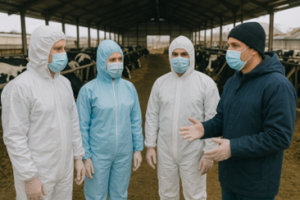
Laboratory methods for detecting FMD include antigen detection, enzyme-linked immunosorbent assay (ELISA), virus isolation/characterization, and real-time polymerase chain reaction (RT-PCR). Although virus isolation is not routinely performed for diagnostic purposes, it may be required for vaccine selection and matching. All early-stage tissue processing procedures must be conducted in a biological safety cabinet to minimize aerosol generation and prevent laboratory contamination.
Human Susceptibility and Laboratory-Acquired Infections
Human susceptibility to foot-and-mouth disease virus (FMDV) has been a subject of discussion for decades. To date, the virus has been isolated and typed in over 40 human cases, predominantly serotype O, followed by serotype C, and rarely serotype A. FMD infection in humans appears to be rare, and predisposing factors—including close contact with livestock, skin lesions, and high-level exposure—play a critical role in the development of clinical symptoms.
Decontamination and Disinfection
Chemical Methods
FMDV is highly sensitive to acidic and alkaline conditions. Sodium hydroxide (NaOH), sodium carbonate (Na₂CO₃), and other alkaline treatments at pH 12 for at least 10 hours are sufficient to inactivate the virus. Recommended chemical disinfectants include 4% sodium carbonate, caustic soda (NaOH), citric acid, 4% formaldehyde, or equivalent aldehydes such as glutaraldehyde.
A study demonstrated that dried FMDV on steel and plastic surfaces was completely inactivated by exposure to 1000 ppm sodium hypochlorite or 1% citric acid.
Heat and Autoclaving
FMDV is also heat-sensitive. Multiple studies have confirmed that exposure to 100 °C for 1 hour—or an equivalent heat treatment—is sufficient to inactivate FMDV, with no detectable residual infectivity. Steam sterilization using an autoclave at a minimum of 115 °C for 30 minutes is effective for both solid and liquid waste.
Gaseous Decontamination
Animal facilities and laboratories working with FMDV are typically subjected to gaseous decontamination prior to maintenance or decommissioning. Formaldehyde has been used for decades as the preferred method for room and equipment decontamination.
Transmission via the Human Nasal Route in Laboratory Settings
Only a single instance of FMDV transmission from humans to susceptible animals via the nasal route has been reported under laboratory conditions (Sellars et al.). This was an experimental exposure in which personnel deliberately exhaled virus-laden aerosols into the nasal cavities of animals for 30 seconds to induce infection. This artificial exposure significantly reduces the likelihood of natural occurrence. There is no evidence of FMDV transmission from humans to susceptible animals following routine laboratory work.
Organizational Measures
EU-FMD guidelines and many research centers recommend a 3–5 day quarantine period for personnel after handling FMDV in laboratory settings.
Summary and Conclusions
Foot-and-mouth disease remains one of the most significant challenges to the dairy and beef industry globally, including in Iran. Although vaccines and therapeutic measures exist, none replace the fundamental importance of strict hygiene and biosafety practices. Preventing the introduction and internal spread of FMD within dairy and beef herds is essential. Even minor lapses in biosecurity protocols can allow disease entry, threatening animal health, herd productivity, and causing substantial economic losses.
By implementing rigorous hygiene measures and biosafety principles, continuous monitoring, and rapid response, the risk of FMD introduction or spread can be significantly minimized, thereby protecting animal health, sustainable production, and farm profitability. FMD control faces additional challenges such as viral genetic diversity, asymptomatic carriers, and resource limitations in developing countries. Continuous use of appropriate disinfectants and enhancing animal immunity through optimal nutrition are crucial and effective measures for preventing infection with FMDV.

